About
Hey all, welcome to this article format that I've been working on.
I've come to discuss something that's been on my mind about Hyperstratum, specifically about its art direction.
The game has been progressing nicely, and so far, the character I've been using is one by a user called Sscary on itch.io.
It is working well, and is currently doing the job. However, because of the limitations of 2D, I do not think it will work well for Hyperstratum.
With the sheer amount of items that Hyperstratum will have, and the number of directions that the character faces (8), that becomes unfeasible as an option for the art. I'd like to discuss my thought process with you on how I'm planning to circumvent the art issue.
So What Happens Now?
Currently, the assets I'm using stay.
They work for now, while I work on things like World Generation, UI, Inventory, Monsters and AI.
In fact, just today, whilst working on 0.0.1-20260705-R, I've fixed a bug with how sprites face the camera. They were just facing the camera's central point before, but now correctly face the direction of the camera. I fully intend for there to be some 2D billboarded sprites in the final game, as well as other 2D art styles like sprite-stacking, which fit the lore of the Eccliptids.
In the future, I will implement a new method for art style, which I'd like to touch on with you below. The timeline for this is unknown.
How do we fix the issue?
In my opinion, this is not going to be an easy fix.
There are a few ways to go about this though, each with their own benefits and disadvantages.
-The Original Approach-
I think this is the worst way to go about this.
This method is simple enough, we simply keep the sprites we have. We'll use a custom area where the sprite holds items and essentially have an approach similar to Terraria, but with six more directions.
The benefits are we have to invest very little, as we already have a working sprite base, space would not be a concern either, as it'd remain small in scope and size for the character assets.
Disadvantages include that it is going to be incredibly complex to have different animations for all eight directions for a multitude of weapons and tools. Think, swords, pickaxes, bows and spells all will have different animations, plus the direction of fire may not be the same as travel, so the sprite would likely have to be split head and body from legs.
Overall, this is the immediate approach. It works for testing, but the added complexity will pile up into debt eventually, creating a messy, bloated system that is too rigid for fluid and unique animations.
-The Tenna Approach-
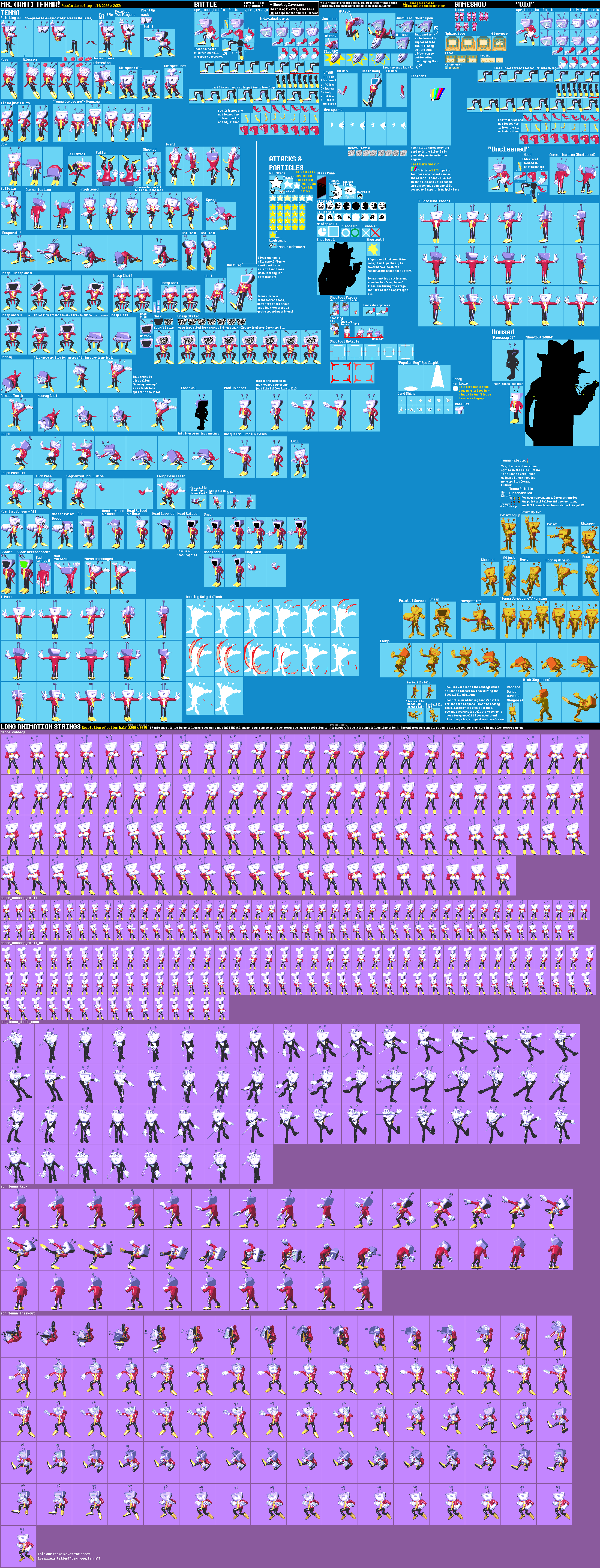
The Tenna Approach is the idea that sprites are used, but the sprites are 3D models that have been baked into spritesheets. This has been used in games like Donkey Kong Country, Doom and Doom II and the most recent famous example, Deltarune's Tenna.
This method can give a certain vibe to sprites, as lighting is usually baked in. A 3D model would have to be made too, likely in Blender.
Advantages include that the player could be rendered holding every item at all 8 directions and wouldn't break the current workflow, allowing me to use the same method I use now.
Disadvantages are numerous, if I pose a sprite wrong, it could affect hundreds of sprites. It would also be tedious and take up a large size considering they are images. It is also a rigid approach, as such edge cases would have to be accounted for too, increasing file size and complexity further.
This is likely not the method I approach the game with, but I may use it for some of the Eccliptids.


-The Rayman Approach-
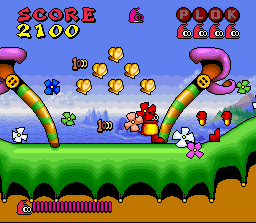
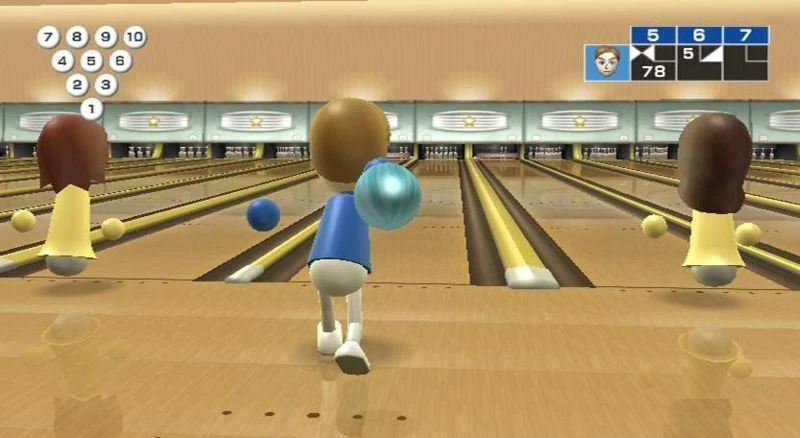
The Rayman approach is the most simple: have no arms, and render the item as a hovering object around the player.
This has been used in games like Enter the Gungeon, Plok, Wii Sports and the titular Rayman.
This method relies upon having arms as separate, floating appendages that are not attached to the player, but orbit them instead.
This method works well for having many items, like Enter the Gungeon, and is not expensive to calculate at all. It can be used to quickly and efficiently add new items just by defining a point for the item to hover around.
Its biggest flaw however, is its greatest advantage. Floating hands can work well for certain artstyles, but if your art isn't designed for it, this approach can look bad, or even worse, lazy.
This approach is worth looking into, but I do not think this is the method Hyperstratum will utimately take.

-The 3D Approach-
The 3D approach is simple enough to explain, just use 3D models.
3D models are easy to iterate upon, they can be posed and modelled however you see fit, and better yet, they can be modelled after existing 2D artwork.
This gives them a unique advantage, they can be used in any number of ways and items can follow a point on a 3D model quite easily.
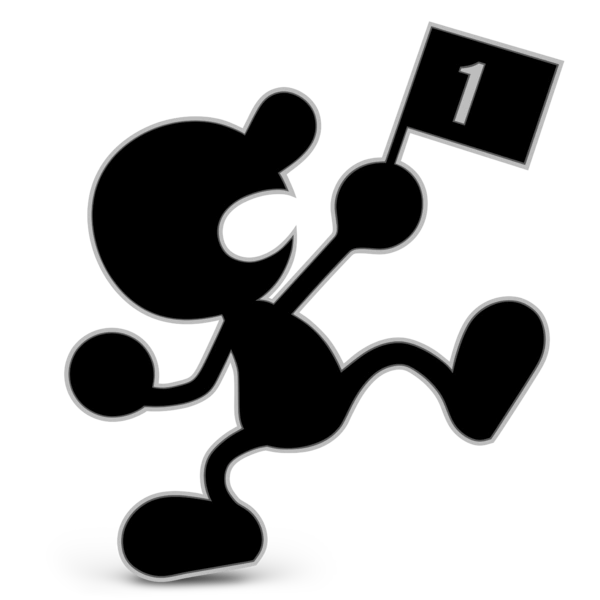
3D models have been used for years, including on characters you may think are 2D, like Mr. Game and Watch in Super Smash Bros.
Pluses for 3D include their iterability, utility and portability. They are simple to add new animations to with skeletal animations and can be moved from project to project simply by drag-and-dropping the .gltf file.
It has two major downsides: One, 3D models take a lot more time and effort than 2D art. Two: I suck at modelling.
This is the path I would like to take however. Despite the flaws, I have a vision in mind for the models and once added, should be simple enough to get working with AnimationPlayers.
I also want the models to have some basic cel-shading for contrast and no keyframe interpolation.
That second point might seem strange, but I think it helps make 3D models feel more 2D, especially at an orthogonal camera angle. If you do not know what interpolation is, Quake lacked it, and you can see and feel its effect.
3D?
As this project has grown in size, the strategies I have had to take have been somewhat guided by the limitations at hand. Like the world when it was 2D, it provides too much technical debt for me to willingly continue down this path.
I do intend to use 2D animation with some creatures in the game, such as a new type I've been thinking of called Spritans, which are friendly pet creatures that roam Stratacube.
3D paves a way for that technical debt to be minimised, and hopefully with the correct art direction, fit in with the rest of the world.
More details will hopefully follow soon, and I hope you agree with me that this is the best method of approach for Hyperstratum.
Thanks for your time folks. See you next time in another article.
